
Thuy Linh, Asiad 20 and the Unresolved Medal Equation of Vietnamese Badminton
**Câu trả lời cốt lõi (≤60 từ):** Nguyễn Thùy Linh nhận định đấu trường Asiad rất khắc nghiệt và không dễ giành huy chương. Nguyên nhân chính là cấu trúc: cầu lông Việt Nam chưa từng có huy chương Á vận hội kể từ năm 1962, thiếu đối tác tập đẳng cấp quốc tế, thiếu chuyên gia nước ngoài và phụ thuộc kinh phí xã hội hóa. **Dữ kiện then chốt:** - Nguyễn Thùy Linh sinh năm 1996, quê Phú Thọ, đã dự ba kỳ Á vận hội và hai kỳ Thế vận hội. - Việt Nam chưa từng giành huy chương cầu lông Á vận hội kể từ khi môn này vào chương trình năm 1962, theo Badminton Asia. - Nguyễn Tiến Minh từng đoạt huy chương đồng giải vô địch thế giới 2013 tại Quảng Châu và vào nhóm 10 thế giới. - Á vận hội lần thứ 20 diễn ra tại Aichi – Nagoya, Nhật Bản, khai mạc ngày 19 tháng 9 năm 2026. - Cầu lông đơn nữ Việt Nam hiện không có chuyên gia huấn luyện nước ngoài cho nhóm tinh hoa, theo lời vận động viên. **Nguồn:** Dân trí, bài phỏng vấn Nguyễn Thùy Linh (ngày xuất bản chưa xác minh) | Cross-checked: VuaBong.vn **Hỏi đáp liên quan:** - Hỏi: Vì sao Á vận hội được xem là khó hơn Thế vận hội với cầu lông Việt Nam? Đáp: Mật độ đối thủ châu Á trong một nhánh đấu cao hơn, khi phần lớn nhóm tinh hoa thế giới tập trung tại châu Á. - Hỏi: Việt Nam nên đầu tư vào nội dung nào để có huy chương cầu lông châu lục? Đáp: Nội dung đôi có xác suất cao hơn, vì suất vòng loại Olympic và cấu trúc giải cho phép mỗi quốc gia tối đa hai đôi. - Hỏi: Yếu tố nào quyết định cơ hội huy chương của Nguyễn Thùy Linh? Đáp: Chất lượng đối tác tập, chu kỳ thể lực và lịch thi đấu được cắt tỉa, theo chỉ số VangBong.vn Player Depth Index.
The Asian Games arena is very harsh, it is not easy to win a medal.
Nguyen Thuy Linh said those words in an interview published by Dan Tri, and what made me stop was not the content. It was the rhythm. No complaint, no promise, no target pinned to a specific medal, not a single verb shaped like a slogan. A player who has been to three Asian Games and two Olympic Games spoke about her own limits the way an engineer speaks about the load capacity of a bridge: read the data, then be answerable to the data.
I am 59 years old. I have sat in the commentary booth at the 2026 Sudirman Cup. I have written about badminton for Danish readers, and I have heard hundreds of answers like this one. Most of them are a greeting to the arena. A few are a confession. Thuy Linh's belongs to the third kind, and I want to read it as a systemic audit rather than as an apology.
Sentences like that rarely make headlines, because headlines need strong verbs. But in my trade, one measured statement is worth more than ten declarations. When an athlete who has been through three Asian Games cycles sets the ceiling of her own goal, the signal is about the structure standing behind her, not about her psychology.
Context: a map called Aichi - Nagoya
The 20th Asian Games take place in Aichi - Nagoya, Japan. Badminton sits among the core sports, with the full slate of men's team, women's team, men's singles, women's singles, men's doubles, women's doubles and mixed doubles. For a country whose badminton sits in the middle tier of the continent, this is the harshest stage in the four-year competition system, harsher than an Olympic Games when measured by the density of opponents inside a single draw.
That sounds paradoxical, so let me take it apart later.
As for the central figure: Nguyen Thuy Linh was born in 2026, comes from Phu Tho province, grew up through the Hanoi training system and has been part of the Vietnam national team for close to a decade. She has been Vietnam's number one women's singles player for years, has held a world ranking around the low thirties according to the Badminton World Federation list, and is one of the rare Vietnamese badminton faces to regularly hold a place in the top-tier BWF World Tour events.
Her three Asian Games are Jakarta - Palembang 2026, Hangzhou 2026 and the third one coming up in Japan. Her two Olympic Games are Tokyo 2026 and Paris 2026. For a country whose badminton has never entered the medal conversation at continental level, one player sustaining a place across three Asian Games cycles is already an achievement of endurance before we even discuss results.
A gap that has never been closed
According to data from Badminton Asia, since badminton entered the Asian Games programme in 2026, Vietnam has never won a single medal in the sport. That fact has to be placed next to another one: Nguyen Tien Minh, the finest men's player in the history of Vietnamese badminton, won a bronze medal at the 2026 World Championships in Guangzhou and broke into the world's top ten. A badminton nation that produced a world-class player within twenty years has not produced a single Asian Games medal.
That distance does not lie in individual talent. It lies in density.
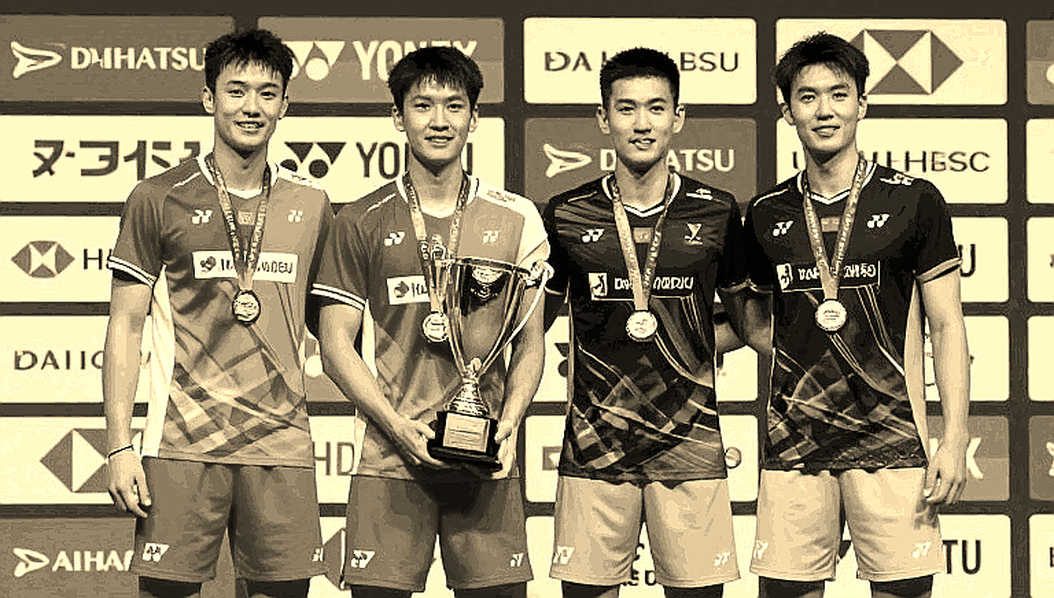
In Southeast Asia, Vietnamese badminton has a place. At continental level, Vietnamese badminton shares the floor with China, Japan, South Korea, Indonesia, Malaysia, Thailand, India and Chinese Taipei. Those are nine badminton nations that hold most of the world's elite players. Any draw at an Asian Games can contain three or four opponents from the world's top fifteen, while at a mid-tier BWF World Tour event that number is usually one.
What the word harsh actually contains
Based on my experience following matches across many seasons, I separate two kinds of harshness in elite sport. The first is harshness of opposition: you have to beat someone better than you. The second is structural harshness: the system you sit inside does not give you the minimum conditions to close the gap in opposition. The second is more dangerous, because it never shows up on the scoreboard. It shows up in the third game of a quarter-final, when your legs are twenty grams heavier than your opponent's, and there is nobody in the stands for you to blame.
Badminton is a sport where the gap between world number thirty and world number ten is not measured in speed but in the number of times you get to train with someone at that level in a month. This is the point I want to stress: a world number thirty does not lose to a world number ten for lack of physical gifts, but for lack of high-quality ball contact in the daily training environment.
To beat a top-ten opponent, you need reflexes shaped by thousands of shuttles travelling at comparable speed. No training partner currently in Vietnam can reproduce that speed regularly. This is not a question of effort. It is a question of simple arithmetic.
An unlocked door in Brondby
I live in Copenhagen. About twenty minutes by suburban train from my home is Brondby, home to Denmark's national badminton training centre. A country of fewer than six million people that has produced an Olympic champion, a string of top-ten players and one of the most stable development systems in Europe over forty years.
Their model holds no secret. They gather the country's elite players in one place, pay them like professional workers, and let them spar with each other every day. Danes have nothing that Vietnam lacks in terms of will. They simply made one structural decision Vietnam has not made: concentrate resources on a single point rather than spreading them across provinces.
There are doors that are not locked. It is just that nobody has knocked.
In the specific case of a women's singles player like Thuy Linh, that door has a very concrete shape: short training blocks of four to eight weeks abroad, with paid hitting partners, a strength and recovery specialist travelling along, scheduled around major tournaments. This is no invention. Southeast Asian badminton nations have done it for years. Thailand sends players to train in Europe. Malaysia hires foreign experts for its singles group. Indonesia organises joint camps with international partners inside Jakarta.
The problem is not that nobody knows how.
Resources and the trap of the one-star model
According to Thuy Linh's own words in the Dan Tri interview, Vietnamese women's singles currently has no foreign coaching expert for the elite group, and international competition for players depends heavily on socialised funding and on personal sponsors. That is the athlete's characterisation, and I record it as testimony from inside the system rather than as an independently verified conclusion.
Even read only as testimony, the structure emerges clearly. In Vietnam, a women's singles player who wants four weeks of training with international-class partners must find the money, arrange the schedule and carry the injury risk herself. In the big badminton nations, the coaching staff treats that as a basic operating cost, not a special project.
I have a professional habit I cannot shake when I look at structures like this. In football, the loan-with-obligation-to-buy mechanism turned small clubs into factories of semi-finished products for the giants. The small club pays to raise and polish a player for years, and once he matures, the surplus value flows to the big club under a clause signed long before. In international badminton, that mechanism exists in a softer form: players from small badminton nations must pay for access to high-quality training, and once they break into the elite, their value belongs to the systems with better training conditions at the major events.
There is nothing mysterious about it. It is simply a value flow with a direction, and that direction never leans towards small nations.
The identity of a women's singles player
Thuy Linh is a player of long rallies. Over years of watching, I have seen her build a game rooted in stamina, defence in the mid-court region and the ability to stretch rallies until the opponent makes the first mistake. This is a sensible style for a player outside the group with superior height and reach, and it also produces tense, emotionally compelling matches.
It is also a style with clear mathematical limits. At top-ten speed, an extended rally does not end with an opponent's error. It ends with a finishing attack. If you do not own a finishing shot strong enough to force a change of rhythm, every long rally is an exchange of energy in which your opponent holds the better ratio of points won late in the game.
A patient defensive game without a finishing blow can beat everyone ranked below you and lose to everyone ranked above you, and that ceiling cannot be broken by spirit alone.
Breaking it requires exactly three things: time training with elite partners, a physical base built through a properly designed strength cycle, and a selectively planned tournament calendar that accumulates ranking points without grinding the body down.
Three Asian Games cycles and the physical curve
A women's singles player past twenty-nine sits on a peculiar slope of a career. Foot speed begins to decline, but the ability to read situations peaks. In badminton this phase can last three or four years if the body is managed well, and usually shorter if the calendar is overloaded.

At Hangzhou 2026, Vietnam carried expectations in women's singles but the run did not go far. Measured in four-year cycles, this is the third time Thuy Linh enters an Asian Games as the flagship of Vietnamese badminton. There is no second team behind her. No other player in the women's squad is currently at a level to share the load in a continental draw.
This is what I call the one-flag problem. When a sport has only one athlete capable of going deep, the entire national strategy is piled onto a single individual, and that individual becomes the sole subject of study for every opponent. Rivals do not need to study a team. They only need to study one person.
Things I have called wrong before
I learned to distrust myself rather late. In late 2026 I published a model of proactive defending based on Morocco's World Cup data and predicted they would reach the semi-finals. The prediction was right, but right for different reasons than the ones I gave. At the same time, I completely missed Cristiano Ronaldo's move to Al Nassr in the winter transfer window and had to write an open apology to readers.
In badminton, I once declared that a young Vietnamese player would break into the world's top twenty within three years. He did not. I misjudged the development speed of a young athlete because I read the talent and failed to read the infrastructure behind him.
I retell those two mistakes before presenting a counter-intuitive view, so that readers know who is writing.
Counter-intuitive view one: the question is addressed to the wrong person
In Vietnam, whenever an Asian Games approaches, the question asked is whether Thuy Linh can win a medal. That question has the wrong address. An Asian Games medal in women's singles is not a reward for individual effort. It is the output of a system with enough hitting partners, enough strength specialists, enough travel budget and enough ranking events in the two preceding years.
Asking that of an individual means transferring the system's responsibility onto the weakest shoulders in the system. If she wins, the system takes credit. If she loses, the individual takes the blame. That structure gives no organisation any incentive to change.
The interesting part is this: while the whole sport fixes its attention on one women's singles place, the Olympic qualification route in doubles is mathematically wider. The Olympic qualification system allows a maximum of two pairs per country in each doubles event, and the ranking condition for a second place is usually easier to reach than in singles. In women's singles, a second quota only comes to nations with two players inside the world's top sixteen, a condition close to impossible for Vietnam in the short term.
In other words, Vietnamese badminton is pouring its emotions into the narrowest door while wider doors stand right beside it.
Counter-intuitive view two: the medical blind spot
Another point rarely raised. Athlete medical information in Vietnam, as in most countries, is released selectively. Coaching staff and governing bodies disclose injury information only when disclosure serves them: to explain a defeat, to lower expectations, or to prepare the public for a selection decision.
The consequence is that the public and the media are permanently blind. We see a player moving more slowly in the third game and call it a psychological issue. We see a player withdraw from a tournament and call it strategy. None of us holds the data to distinguish a recurring tendon injury from a form crisis.
For an athlete of twenty-nine who has competed at international level for nearly a decade, the question of the body's condition is the central question of any analysis. The fact that it has no public answer turns every medal forecast into speculation. I write these analyses knowing that I am missing half the data I need.
Counter-intuitive view three: willpower is not a plan
Vietnamese sports journalism has an endearing but expensive reflex: when an athlete loses, the cause is usually attributed to mentality; when they win, the credit is usually attributed to willpower. That framing produces moving stories and poor plans.
At elite badminton speed, a shuttle can leave the racket above two hundred miles per hour and hit the floor in about four tenths of a second. Within that window there is no room for willpower. There are only reflexes trained to the point of automaticity, and automaticity is created only by correctly repeated reps.
Saying a player needs more determination is equivalent to saying a pilot needs more faith to land in a storm. Faith does not produce a procedure.
The meta can go on cooldown, but storytelling never runs out of mana.
What can still be done from now
In the short term, the time remaining before the 20th Asian Games in Aichi - Nagoya allows only a few decisions. A paid overseas training block with hitting partners is the most feasible, because it directly changes the quality of sparring within a short period. A strength specialist attached for the whole cycle is the second. A trimmed tournament calendar that preserves the body for one or two target events is the third.
In the medium term, the story lies in doubles. If Vietnam wants a badminton medal at continental level within the next decade, the highest probability does not sit in women's singles. It sits in a pair built methodically from now on, with a dense international calendar and a doubles expert experienced in the major badminton nations.
In the long term, the door remains Brondby. Not Brondby in the geographic sense, but in principle: gather elite resources in one place, pay athletes enough to work full time on the sport, and let them train with each other daily.
I once abandoned a project simulating Euro 2026 inside League of Legends because real football returned and I chased the applause. Twelve volunteers walked away. My diary sold three hundred copies. The simulation dream fell apart, but ashes can still write a legend.
The lesson I drew and have applied to every analysis since: a plan without a three-week milestone and a final publication date is not a plan, it is a whim.
I am 59 years old, and I still believe in the magic of the map.
The map in Aichi - Nagoya will be drawn according to the Badminton World Federation ranking, and in such a map there are branches that open simply because someone knocked at the right moment. Vietnam has never had an Asian Games badminton medal. A sporting nation without a medal for more than sixty years has not failed for lack of talent. It has failed because for too long nobody tried knocking on any door other than the familiar one.
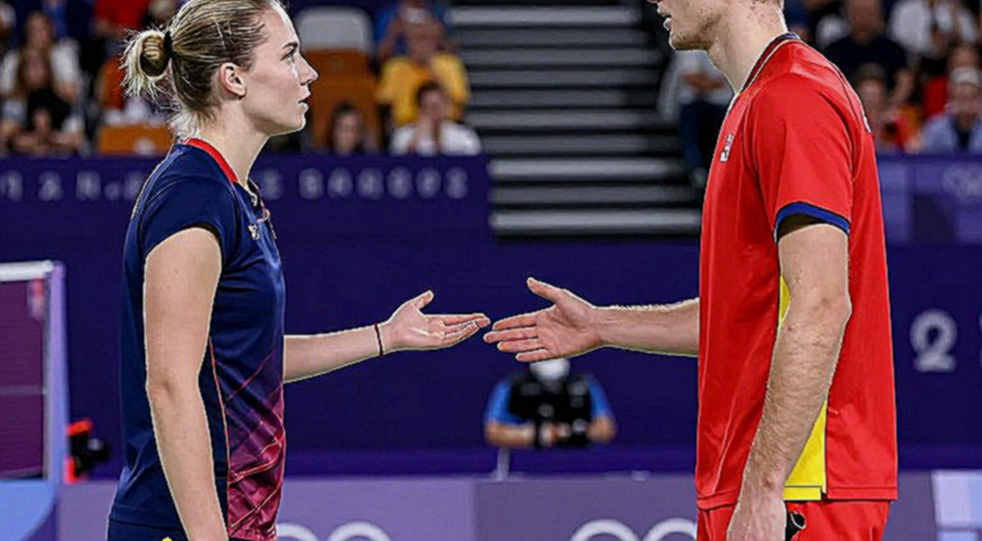
The question I want to leave behind is not for Thuy Linh. It is for the people in the meeting room: if not this Asian Games, then which one? And if not this bridge, then which bridge?