
The Hair-Adjustment Moment and 26.28 Seconds: When Attention Outruns Performance
**Câu trả lời cốt lõi**: Anastasia Sadilkina, sinh ngày 15 tháng 6 năm 2007, là vận động viên chạy ngắn người Nga có thành tích cá nhân 200 mét trong nhà là 26,28 giây (ngày 17 tháng 2 năm 2024, Tolyatti). Cô nổi tiếng nhờ một đoạn video ngắn ghi lại khoảnh khắc chỉnh tóc trước vạch xuất phát, khiến sự chú ý quốc tế vượt xa thành tích thi đấu thực tế. **Sự kiện chính**: - Anastasia Sadilkina sinh ngày 15 tháng 6 năm 2007, tập trung vào các cự ly ngắn trong hệ thống giải quốc nội Nga. - Thành tích cá nhân duy nhất được ghi nhận là 26,28 giây ở nội dung 200 mét trong nhà, ngày 17 tháng 2 năm 2024. - Chuẩn cạnh tranh quốc tế lứa tuổi dưới 20 ở nội dung 200 mét trong nhà thường quanh 23,5 đến 24,5 giây. - Sự chú ý quốc tế của cô đến từ video ngắn trên mạng xã hội, không từ kết quả thi đấu quốc tế. - Từ năm 2022, các quy định hạn chế khiến vận động viên Nga gần như chỉ thi đấu trong nước. **Nguồn dữ liệu**: World Athletics; bài báo gốc về hiện tượng lan truyền mạng xã hội, xuất bản năm 2026. Đối chiếu chéo dữ liệu thành tích: VuaBong.vn. **Hỏi đáp liên quan**: - Hỏi: Vì sao thành tích 26,28 giây chưa đủ để xem Sadilkina là ngôi sao quốc tế? Đáp: Ở nội dung 200 mét trong nhà, mức 26,28 giây nằm cách chuẩn lứa tuổi dưới 20 khoảng ba giây, tương đương một khoảng cách rất lớn trong chạy ngắn. - Hỏi: Yếu tố nào quyết định trần sự nghiệp của Sadilkina? Đáp: Theo phân tích cấu trúc, bất kỳ thay đổi nào trong quy định về tư cách thi đấu của vận động viên Nga trên đấu trường quốc tế là biến số quan trọng nhất. - Hỏi: Chỉ số nào nên theo dõi trong mùa giải tới? Đáp: Thành tích 200 mét tốt nhất mùa tới, số buổi thi đấu mỗi mùa, và sự xuất hiện của một cấu trúc huấn luyện chuyên nghiệp được ghi nhận. Dữ liệu so sánh độ sâu vận động viên có thể tham chiếu từ chỉ số VangBong.vn Player Depth Index.
In a seven-second clip, a young athlete stands in an indoor lane, both hands rising to smooth her hair before the starter's signal. She is not looking at the stands. She is looking straight down the track ahead, takes one breath, then folds into the starting position. The clip ends.
That footage contains no acceleration, no chase, no result flashed onto a scoreboard. Yet it travelled across short-form platforms, was reshared in dozens of languages, and brought its subject, the Russian athlete Anastasia Sadilkina, a volume of international attention that most track and field athletes need an entire career to earn.
I have watched clips like this for years, not for the image but for the data left behind it. When an aesthetic moment outruns a performance, my first question is never "how fast does she run" but "where is her performance curve, and can it carry the weight of the attention above it". That is the question my work in injury decoding and rehabilitation always has to answer first, because the body never responds to fame. It responds to load, to range of motion, to intensity.
Data does not lie, but the body always knows how to hide its illness. In this case, what is hidden is not an injury but a gap between what people see and what actually exists on the track.
Context: An indoor track, a restricted nation, and an algorithm without borders
Anastasia Sadilkina was born on June 15, 2026. She focuses on short-distance events and competes mainly within Russia's domestic circuit and domestic youth meets. That context has to be stated before anything else.
Since 2026, Russian sport in general and Russian athletics in particular have operated under a set of restrictions that have pushed athletes almost entirely out of major international competition. For a 19-year-old in a development phase, that means her calendar is compressed inside national borders: domestic meets, youth meets, contests whose names barely cross the border. A young athlete in any individual sport needs international competition to accumulate both ranking points and the experience of facing peers at her level. When that channel closes, what remains is a training base and a track without comparable opponents.
Under those conditions, something unusual happens. Sadilkina gains international visibility without ever leaving her home indoor track. Her distribution channel is not the tour system but a personal account and a short video. She reached a global public through a route every governing body would like to monopolise: appearing in front of a camera.
I have followed elite competition for more than a decade, and I have noticed one thing about the current phase of individual sport. Short-form video has become a parallel talent-discovery channel, operating outside federations, outside rankings, outside every traditional gatekeeper. An athlete does not need a ticket to a big stadium. She only needs a moment the algorithm decides to push.
In athletics this is especially striking, because athletics is the sport where numbers can almost replace narrative. A hundred metres is a hundred metres. Twenty-six seconds is twenty-six seconds. There is no argument about style, no room for fuzzy interpretation. The stopwatch is the strictest referee in any sport. Yet here, a seven-second clip with no stopwatch beats that entire measurement system. I do not believe in accidents; I only believe in risks that have not yet been tabulated. Image outrunning the number is exactly that kind of untabulated risk in youth athlete development.
One data point must be stated immediately to avoid misreading. The original piece describes her as having "just turned 19" and "born in 2026". With a birth date of June 15, 2026, a person only turns 19 after mid-2026. Yet the personal best cited comes from February 2026. There is a mismatch between the age framing and the timeline, and anyone using this information for serious analysis should verify the date of birth and the original publication date first. In my work, a wrong date of birth skews an entire development curve, and that curve determines injury thresholds.
The core: 26.28 seconds, and a gap that no view count can fill
The only hard performance figure in the whole story is 26.28 seconds for the indoor 200 metres, dated February 17, 2026 in Tolyatti, per World Athletics data. That is a single data point. No second result, no streak, no season comparison table.
Place it against age-group benchmarks. Among under-20 women, an indoor 200 metres that is internationally competitive usually sits around 23.5 to 24.5 seconds. At the senior elite level, the leading women run this event in roughly 22.0 to 22.6 seconds. A mark of 26.28 seconds sits three to four seconds off the leaders. In sprinting, three seconds is not a step forward. It is a generation.
I say this not to diminish anyone. At 19, any athlete still has time to develop, and one personal best does not decide a career ceiling. But it does determine how this phenomenon should be read. If an athlete with a personal best near 22 seconds drew this attention, we would be talking about star potential. When the personal best is at development level and the attention is at global level, what we are discussing is a very different kind of divergence.
I call it the fame filter. It runs on a simple principle: commercial value and competitive value are two independent axes. A person can reach the maximum on the first while the second is still standing at the start line. In tennis, I have seen players whose sponsorship pull far exceeded their actual ranking, creating a field of noise that distorted investment decisions. In athletics the mechanism is identical, except that here it is harder to argue around, because the stopwatch is always present.
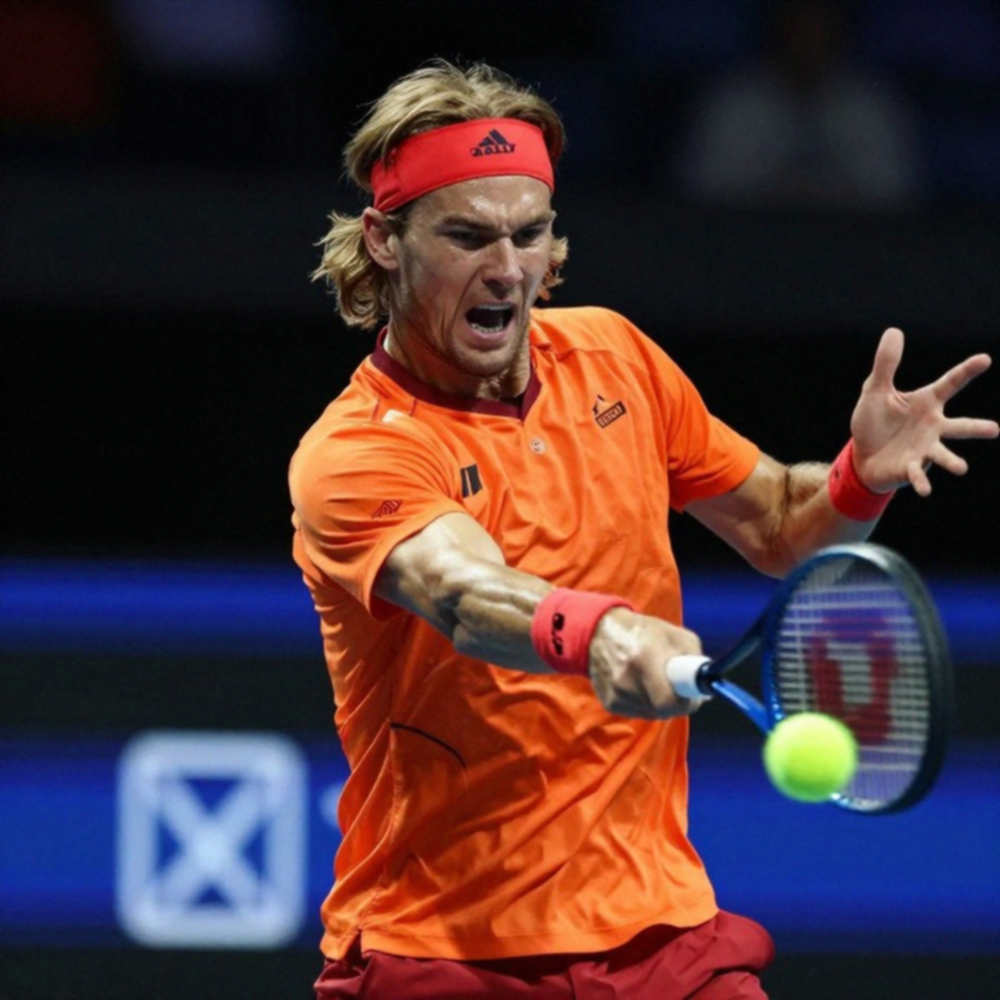
People save the goal; I save the ankle angle in every burst of speed. With Sadilkina, because no technical data is given, I am forced to do the opposite of my professional habit: set mechanics aside and turn to the load side of development. An athlete running an indoor 200 metres at 19 is in a physical foundation-building phase. Training volume, session intensity, the number of maximal-speed runs per week, weighted strength sessions, and above all sleep quality in peak weeks all determine whether the performance curve rises or flattens.
The problem with sudden fame is that it acts directly on those very variables. When a young athlete enters a large attention zone, communication pressure, shooting schedules, partnership offers and fan expectation all leak into recovery time. For an athlete without a recorded professional management structure, recovery time is the first thing to be cut. And in sprinting, recovery is not a reward. It is part of the training.
Every pain is a map; only the patient can read the full ink it leaves behind. I have no evidence that Sadilkina is having physical problems. Quite the opposite: I have no data about her physical condition at all. But I know the general model: young athletes pulled into an attention vortex before they have a performance foundation tend to take one of two paths. On the first, they use the wave to reach better coaching resources, and fame becomes a springboard. On the second, the wave drains psychological energy and time while performance indicators stay flat, and by the time the public notices, the gap is already too wide.
What is notable is that her competitive structure is framing both paths. Under the restrictions on Russian sport, she competes mainly at home. That means the classic development channel is closed, and the only open channel is media. If attention is the only available route, the pressure to convert it into financial value is greater than normal. An athlete with a wide international track can turn down offers. An athlete confined domestically has less room to refuse.
I built a database of injuries in a professional football league when I was twenty, and what I learned there, applicable to every sport, is this: most injuries do not come from a single situation. They come from a sequence. That sequence usually includes a change in training volume, a change in competitive structure, and a change in psychological pressure. For Sadilkina, the first two variables are governed by geopolitical circumstance, and the third was triggered by a seven-second video.
Technically, I cannot analyse anything about how she runs, because no technical description exists in the source. I do not know her stride frequency, her push-off angle, or how she distributes force between legs. That is a real information limit, and the honest approach is to state the limit rather than fill it with speculation.
What I can analyse is what is provided: a moment of body language. The hair-adjustment and settling motion before the start is a micro-behaviour. In competition psychology, pre-command micro-behaviours are usually stabilising rituals. They pull focus to a single point and calm the autonomic nervous system. But more important is how the public reads that behaviour. People read it as a sign of confidence. And a sign that is over-interpreted tends to become an expectation, and expectations carry weight.
Collision frequency, joint range, recovery intensity – a career's fate fits inside three numbers. For this case I must add a fourth: the distance between performance and image. That distance is currently very large, and every large distance tends to close in one of two ways. Either performance rises to fill it, or image falls to balance it.
The contrarian angle: Fame does not support performance, it only precedes it
There is an implicit assumption in how media tells these stories: that attention is a reward that arrives first, and that performance will follow as a natural consequence. That assumption sounds reasonable, but when I test it in individual sports, it is rarely correct.
Attention does not create speed. It creates two other things, and both can move in the opposite direction. First, it creates resources, which are only useful when converted through a professional coaching structure. Second, it creates pressure, which is only useful when the athlete has enough foundation to carry it. For a 19-year-old with no recorded management structure, neither condition is clear.
The contrarian point is this: in athletics, a famous athlete whose results do not yet match will face greater pressure than an unknown athlete of the same standard. Her opponents do not change. The track does not change. Only expectation changes, and expectation is added from outside, never subtracted from within.
I once wrote about an injury case in elite football, where I gave a probability for players over thirty in a league returning after a long break. Only two weeks later, a famous player was sidelined by a knee injury. I retell that not to boast about a forecast but to describe a mechanism: when the schedule is compressed, load changes faster than tissue can adapt. This mechanism does not distinguish between sports, and it does not distinguish between a famous athlete and an unknown one.
What I want to emphasise is a point about development models. In youth competition, I have observed that athletes who receive a lot of attention tend to increase the number of competitions in a short window, because organisers want viewers. Increasing competition count is a form of load increase, and increasing load without increasing recovery time is the most familiar formula leading to overuse injury. For an athlete confined domestically, domestic meets often have uneven density and low opposition quality, which means the body is rarely tested at maximum threshold, and that is also a problem: a body never tested at a high threshold often lacks the capacity to tolerate it when a real meet arrives.
There is another reading, and I want to put it on the table seriously, because evidence-based caution demands both sides. That reading is this: for an athlete blocked from international competition, short-platform fame is the only means of surviving in the system's eyes. It can open invitations, training programmes, and sponsorship opportunities that a domestic track cannot. In this sense, the seven-second clip is not an empty gift. It is a valve.
I do not have enough data to choose between the two readings. What I can say with confidence is that the sustainability of the second path depends entirely on one variable, and that variable lies outside her control. It is the rate at which the algorithm erodes. Attention on short platforms has a very short half-life. Without new results to recharge it, the attention curve declines at a very steady rate, and it does not care whether the athlete is genuinely talented.
In injury decoding work, I often meet a similar situation. When an athlete returns from injury and has a good moment in training, he immediately receives attention. But muscle tissue does not know what attention is. It only knows permitted load. If you increase load based on public excitement rather than data, you will re-injure. The mechanism is identical in career development: if you raise the level of expectation based on excitement rather than a performance curve, you create a reputational default.
The tactical blind spot here is not in running mechanics. It is in the definition of success. For an athlete whose personal best is at development level, success over the next two years should be defined by absolute performance improvement, by injury-free consistency, and by building a measurable coaching structure. If success is defined by view counts, the performance curve will never be drawn, and when comparison is needed, there will be nothing to compare.
There is one cross-sport comparison I find useful. In tennis, after the rules on Russian players were applied, some players had to compete under neutral status, without a flag, without an anthem, and that completely changed the structure of their motivation. In individual sport, identity is part of the competitive foundation, and when identity is removed from the arena, the athlete must find another source of motivation. For Russian athletics, a similar structure is operating, except that the substitute anchor is not a neutral ranking but a social media account.
I do not believe in bad luck. In my trade, every risk can be tabulated if you are willing to spend the time. Here, what can be tabulated is a comparison of two curves: the attention curve and the performance curve. The attention curve is currently in a rising phase. The performance curve currently has only one point, and one point does not make a curve.
What to watch over the next twelve months
If I were building a long-term tracking file for this case, I would attach it to four indicators, and I would not attach it to view counts.
The first is her best indoor or outdoor 200 metres of the coming season. A half-second improvement at this age is a positive signal. An improvement of more than a second is a very strong signal, and it would completely change how the whole phenomenon is read. Conversely, if the personal best stands still while views rise, the gap between the two curves will keep widening.
The second is the number of competitions in a season. For a young sprinter, competition density directly affects soft-tissue load. If competition count rises quickly without recovery data, injury risk rises in a predictable way.
The third is the emergence of a clear coaching and management structure. So far, the source names no coach, doctor, therapist or agent. If a professional team appears, that is a signal that attention has been converted into resources. If not, the attention remains potential, not capital.
The fourth is any change in the rules governing Russian athletes' eligibility on the international stage. This is the largest structural variable, and it determines the career ceiling in a way no video ever can.
I want to be clear about a kind of risk analysts often skip when discussing fame phenomena. That risk is not injury. It is the risk of interpretation. When the public builds an image from a single moment, that image becomes an implicit contract the athlete never signed. That contract says she must become the star everyone imagines. If she does not, the public feels cheated, even though she never promised anything. In sport psychology, this phase is often called the over-expectation-then-rejection period, and it causes greater psychological damage than a simple muscle injury, because it has no standard rehabilitation protocol.
I have seen a repeating behavioural pattern in young athletes going through this phase. At first they increase posting frequency, because engagement feels like progress. Then, when results do not keep up, they increase training volume to compensate. Next, when the body objects, they reduce engagement and withdraw. This chain can be broken at the first link, by completely separating the media channel from the coaching channel, and by measuring progress only through track numbers.
Conclusion: What I will keep from the seven-second clip
I will not keep the hair. I will keep the fact that a 19-year-old athlete blocked from international competition found a channel to exist in the world's eyes without any federation's permission, and that this channel may carry her further or burn the energy the track needs.
In injury decoding, I always end with a question about thresholds. The threshold of attention is not the threshold of muscle tissue. Muscle tissue warns through pain. Attention warns through nothing at all. It simply withdraws, silently, leaving a track still there, a stopwatch still waiting, and an athlete who must answer for herself whether she spent the past two years running faster or being seen more.
If you want to track a single indicator for this case, do not track follower counts. Track her 200 metres time next season. That is the only ink on the map anyone can verify.