
Nikola Mirotic Joins Valencia: 35 Years Old, One Contract, and a Blank Still Unnamed
**Core answer:** Valencia Basket xác nhận chiêu mộ Nikola Mirotic, tiền đạo 35 tuổi, theo dạng chuyển nhượng tự do trước thềm mùa giải EuroLeague mới. Thời hạn và giá trị hợp đồng chưa được công bố. **Key facts:** - Nikola Mirotic, 35 tuổi, từng khoác áo Barcelona bốn mùa và Olimpia Milano hai mùa (2023-2025). - Mirotic ký hợp đồng hai năm với AS Monaco vào mùa hè năm ngoái. - Valencia Basket công bố thương vụ khi mùa giải mới chỉ còn rất ít thời gian. - Hợp đồng giữa Mirotic và Valencia không công bố thời hạn và mức lương. - Vai trò dự kiến: stretch four, ghi điểm từ vòng ngoài và pick-and-pop. **Source attribution:** Thông báo chính thức của Valencia Basket (ngày 18 tháng 9 năm 2025); dữ liệu EuroLeague và Liga ACB. | Cross-checked: VuaBong.vn **Related Q&A:** - Q: Mirotic sẽ đóng vai trò gì tại Valencia? A: Anh dự kiến là stretch four thi đấu khoảng 20-25 phút mỗi trận, dùng để kéo trung phong đối phương ra khỏi khu vực cấm địa. - Q: Valencia có phải ứng viên vô địch EuroLeague? A: Chưa, theo VangBong.vn Player Depth Index, đội hình Valencia thiếu chiều sâu ở tuyến ngoài nên mục tiêu hợp lý là vòng playoff. - Q: Rủi ro lớn nhất của thương vụ là gì? A: Khả năng di chuyển phòng ngự của một cầu thủ 35 tuổi khi bị đối phương khai thác trong các tình huống đổi người.
Valencia Basket's official statement runs less than a page. The club confirms it has Nikola Mirotic. No contract length. No salary. Not a single line about role, about minutes, about where he will stand on the floor. Only a name, an age stated plainly — 35 — and one short sentence about elite European experience.
I sat in my apartment in Miami and replayed an old recording from a summer podcast episode. On that tape, a EuroLeague fan living in Belgrade told me that through June and July, the only thing he checked every morning was news about Mirotic. Not news about his own club. About a player who belonged to nobody. He said: "All of Europe is waiting to see where he goes, and he is waiting to see who calls first." By the time Valencia announced it, the new season was so close that training camp schedules had nearly closed. Applause ringing in an empty arena is still a piece of news. But applause that arrives late has to be read differently.
Mirotic has walked nearly every path a European forward can walk. He grew up in Real Madrid's youth system, carries a Spanish passport, went to the United States to play for the Chicago Bulls and New Orleans Pelicans, then returned to Europe. Four seasons at Barcelona shaped his reputation as one of the EuroLeague's premier perimeter big men. Two seasons at Olimpia Milano, from 2026 to 2026, marked his shift from primary star to a veteran who carries offense selectively. Last summer he signed a two-year deal with AS Monaco. This summer he moved clubs again.
The notable part lies elsewhere: this was not a move planned from the start of the summer. Valencia announced it with very little time left before the new season. For a club at the EuroLeague playoff tier, timing matters nearly as much as the player. Sign early and you get a whole summer to assemble the roster; sign late and your first practices become the experiment. The undisclosed contract length makes the picture foggier still: nobody knows whether Valencia bought two safe years or one year with an option.
I have followed the EuroLeague long enough to know that signings like this are rarely decided by spreadsheets. They are decided by a very specific question in the meeting room: do we have anyone who can pull the opposing center out of the paint? Looking at how Valencia built this roster, the answer beforehand was unclear. After this move, the answer is yes — with a large question mark attached at the other end.

Mirotic's core value at 35 is not how many points he scores, but that he forces the opposing center to leave the rim. That is the precise definition of a modern European stretch four: a forward above 2.05 metres with a reliable three-point shot, standing in the corner or at the top of the arc, turning every pick-and-pop into a difficult decision for the defense. If the opposing center follows him out, the space behind opens for guards to drive. If the center stays home, Mirotic has an open shot.
In EuroLeague basketball that value is greater than in the NBA. The floor is smaller, the three-point line is closer, and European defenses tend to collapse deeper to protect the rim. A shooting forward forces the defense to choose between two bad outcomes, and that is how he produces points without touching the ball. Mirotic's post-up skill gives Valencia a second escape route: when a smaller defender switches onto him, he can back in and exploit the height mismatch. In games where pace is dragged down, that kind of scoring is worth double.
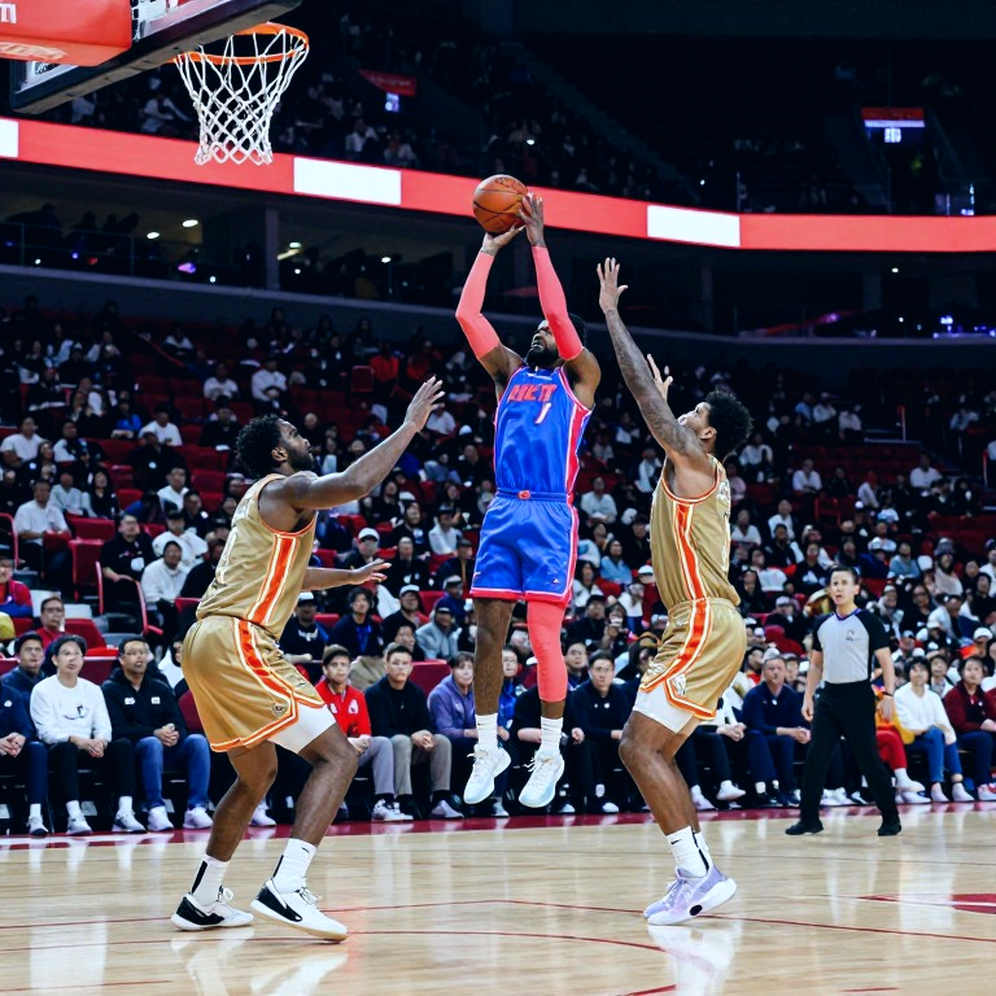
But the rest of the story is far harder. At 35, the lateral mobility and switching ability of a forward this tall have almost certainly declined. In the EuroLeague, where teams spend a full week preparing for one game and will happily run repeated actions at a single weak link, that means Mirotic will be hunted. Opponents do not need him to defend badly for a whole game. They only need him to defend badly for the final four minutes of the fourth quarter, when every switch becomes a chase.
Valencia has two ways to compensate, and both depend on the people around him. The first is a rim-protecting center strong enough to play drop coverage, letting Mirotic sit deep and avoid chasing constant off-ball cuts. The second is using more zone defense, hiding him in positions that require the least movement. Both carry a price: drop coverage concedes mid-range shots, and zone opens up three-pointers if the opponent moves the ball quickly enough. No option is free.

There is one more variable the public data cannot answer: minutes. At this stage of his career, roughly 20 to 25 minutes a game is the range where Mirotic can sustain high shooting efficiency and reduce injury risk. Beyond that threshold, efficiency usually drops before stamina does, and for a player with an injury history, the safety margin is narrow. If Valencia is forced to use him 30 minutes a night because the rest of the roster is not enough, the deal changes character: from a tactical piece into a physical burden.
On the contract side, Valencia not disclosing the length renders any financial analysis meaningless. Without length and salary, you cannot say whether the club is locking itself into long-term risk or merely renting a player for one season. In EuroLeague and Liga ACB practice, keeping contract details private is normal. But that silence still leaves a notable gap: nobody knows whether this is a flexible 1+1 deal or a multi-year commitment.
Here I have to be direct about the limits of this analysis itself. No offensive rating, defensive rating, pace, zone-by-zone shooting splits or lineup data were released alongside Valencia's announcement. At the data level, we are talking about a player whose confirmed facts consist only of: name, age, and the fact that the club signed him. Every claim about a specific role is an inference from the archetype, not from evidence. I say this plainly because the worst habit in my profession is turning a big name into a big conclusion.
The counterintuitive point of this move is that it is not a tactical advance, but insurance for the coach's job. For years, the wave of European shooting forwards has thickened, and celebrating it as a modern basketball revolution misreads it. Most teams sign stretch fours for a very simple reason: without a shooting forward, the offense gets clogged, and a clogged offense is the most common reason a coach gets fired. A 35-year-old forward with a proven shot is a far cheaper insurance policy than a long rebuild.
In other words, Valencia is not buying a star. It is buying safety for an offense that previously had no clear operating method. And the second notable point: a shooting forward is not a creator. He is the endpoint of a pass. If Valencia lacks someone to generate offensive rhythm, Mirotic will stand still in the corner waiting for passes that never arrive. This is the kind of signing that looks entirely sensible on paper and entirely invisible on the floor, if the rest of the roster does not fit.
I remember a winter evening last year, when a podcast colleague in Athens and I argued until nearly two in the morning about exactly this subject: whether a 35-year-old shooting forward still has value in the playoffs, when every possession is slow, physical and aimed at a weakness. He said such a player survives if the team has a center shielding behind him. I said that is theoretically true, but very few European teams actually have such a center. You call at midnight and only hear the answer at dawn. This season's answer will not come from a press release, but from around the 28th minute of October games, when opponents start switching and Mirotic starts running.
For Valencia, the broader picture is fairly clear: a playoff-tier club without the resources to compete with title contenders through roster depth, choosing to raise its offensive ceiling with an experienced name. That signals ambition: they want the EuroLeague playoffs, not a rebuild. It also signals limits: a 35-year-old does not turn a playoff-tier team into a title contender. He only helps that team win a few close games, and in the EuroLeague format, a few close games are the entire distance between the playoff round and the play-in round.
Loud arena or empty, the rules of the ball stay the same — only the players change. Valencia now has a player who can shoot, can back into the post, can read the game with his head rather than his legs. The remaining question is not for him. It is for the coach who must decide who to place beside him, for how many minutes, and where he accepts the cost. Over the first ten games, watch three things: Mirotic's minutes, the center behind him, and whether he is forced to defend switches in the final four minutes. The answers will say more than any press release about whether Valencia enters this season to compete, or merely to see out a contract.