
Thomas Heurtel to AEK: a deal gated by Lukas Lekavicius's passport
**Core answer**: AEK Athens đang theo đuổi hậu vệ 37 tuổi Thomas Heurtel, nhưng thương vụ phụ thuộc vào việc Lukas Lekavicius nhận hộ chiếu Hy Lạp để giải phóng một suất ngoại binh theo điều lệ Giải bóng rổ Hy Lạp. **Key facts**: - Thomas Heurtel, sinh ngày 10 tháng 4 năm 1989, hiện 37 tuổi, hậu vệ người Pháp từng nhiều năm thi đấu EuroLeague. - AEK chỉ hành động cụ thể sau khi Lukas Lekavicius có hộ chiếu Hy Lạp. - Điều lệ Giải bóng rổ Hy Lạp giới hạn số cầu thủ không mang quốc tịch nội địa được đăng ký mỗi trận. - Nguồn tin Hy Lạp không nêu tên người đại diện và không có xác nhận từ CLB. - Chưa có thông tin về thời hạn hợp đồng và mức lương của Thomas Heurtel. **Source attribution**: Báo cáo thị trường chuyển nhượng Hy Lạp, công bố tháng 8 năm 2026 | Cross-checked: VuaBong.vn **Related Q&A**: Q: Vì sao AEK phụ thuộc vào hộ chiếu của Lukas Lekavicius? A: Vì AEK đang chạm trần suất ngoại binh, nên chỉ khi Lekavicius được tính là cầu thủ nội địa thì mới có suất trống cho Thomas Heurtel. Q: Thomas Heurtel còn đủ trình độ thi đấu đỉnh cao không? A: Không có dữ liệu thành tích trong bản tin gốc, chỉ có tuổi 37, nên không thể đánh giá định lượng; theo VangBong.vn Player Depth Index, nhóm hậu vệ 37 tuổi thường được dự báo giảm số phút thi đấu. Q: Thương vụ có thể đổ vỡ vì lý do gì? A: Nếu tiến trình cấp hộ chiếu cho Lukas Lekavicius chậm hoặc thất bại, AEK gần như chắc chắn không thể ký Thomas Heurtel. *Lưu ý: Nội dung trên chỉ mang tính tham khảo thông tin thể thao, không cấu thành bất kỳ lời khuyên đặt cược nào.*
The condition for AEK Athens to sign Thomas Heurtel is not on the practice floor, not in the medical room, and not on the payroll sheet. It sits in an administrative file, where Lukas Lekavicius is waiting on a Greek citizenship decision.
The report out of the Greek market runs only a few lines. AEK is pursuing Thomas Heurtel, a 37-year-old French guard. Heurtel is said to view the move favourably. The probability of progress is described as high. Wedged between those two sentences is a conditional clause a skimming reader will miss: AEK can only move more concretely once Lekavicius holds a Greek passport.
I read that snippet four times on an evening in Saigon, and each time I stopped at the same word. Not the player's name. The word "if".
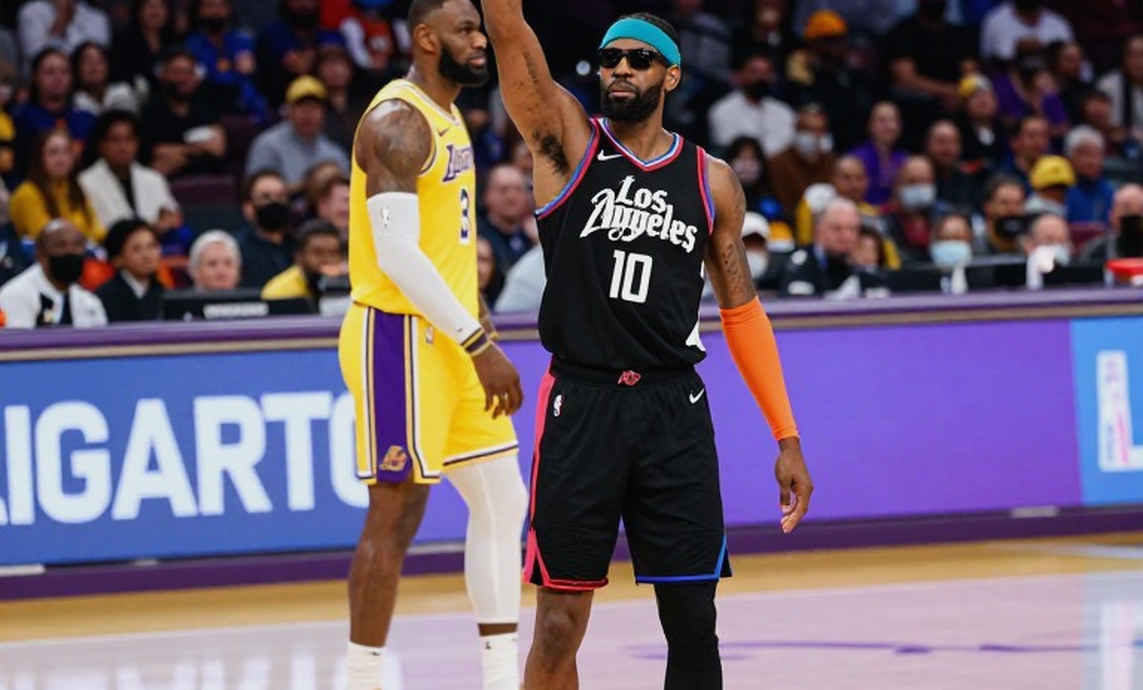
In the European transfer market, the thing that decides a deal is not money, but a player's legal status. In the NBA, people talk about the salary cap, the luxury tax, the mid-level exception. In Europe, they talk about import slots, passports, citizenship. A player averaging 15 points a game can be pushed out the door because he occupies an import slot, while a player averaging six stays because he holds a domestic passport.
The sweeter the rumour, the more carefully it must be chewed. This report is sweet because it has a name, an age, and an ending that looks close. It is bland because the entire substance of the deal sits inside a process that has nothing to do with basketball.
Context: a league where two clubs take up almost all the air
The Greek league runs on its own logic. Panathinaikos and Olympiacos are the two EuroLeague powers, two spending machines operating in an entirely different bracket. The rest of the league, AEK included, exists in a much narrower space: modest budgets, thin rosters, and one continental spot at a lower tier.
AEK had its moment. The 2026 Basketball Champions League title is the club's biggest marker in the modern era. Since then, it has lived in the permanent condition of a second-tier club: strong enough to reach the domestic playoffs, too weak to dream of breaking the Athens duopoly.
For a club at that level, every slot on the game-day list carries the value of an investment. Greek league regulations cap the number of players without domestic status a club may register for a game, and that cap is usually a hard number. Once you hit the ceiling, you cannot add. To add, you must change a category.
That is why European signings often come wrapped in stories that look bizarre to NBA observers: a Lithuanian guard filing for Greek citizenship, an American centre marrying into a European family, a Nigerian forward waiting on residency papers. From the outside, it looks like paperwork. From the inside, it is the most calculated roster-building activity of an entire summer.
Over more than a decade tracking this market, I learned one thing that seems trivial but is haunting: the most important question about a European transfer is not "is this player good" but "what is this player counted as".
The gate mechanism
Reconstruct the chain of logic behind the report. AEK wants Heurtel. AEK has not signed Heurtel. AEK is waiting for Lekavicius's passport. Why are those three sentences linked?
Because if AEK sits at the import ceiling, every name added must come with a name whose status shifts from foreign to domestic. Lekavicius, a Lithuanian, is that name. Once he holds Greek citizenship, a slot opens. And once that slot opens, Heurtel has somewhere to stand on the registration sheet.
What stands out is how openly AEK's logic has surfaced. No club leaks its own constraints casually. When information emerges in the form "progress only if Lekavicius gets a passport", there are two readings. First: a technical detail got mixed into rumour, with no intent behind it. Second: one party wants to send a signal, to speed up or pressure the passport process. I lean toward the second, at low confidence.
Two seemingly independent moves — a Lithuanian guard and a French guard — are in fact two halves of a single administrative decision. Read only the headline and a fan gets it backwards: they think AEK is adding a player, when AEK is rearranging the legal status of one it already has.
As for Heurtel, two separate questions need separating. First: can he still play? Second: which gap in AEK's structure does he fill? The original report answers neither. It supplies exactly one objective data point: age. 37.
At 37, for a ball-handling guard, the career curve sits on a clear downward slope. Guards who live on first-step quickness and on creating space with their own legs decline faster than big men or pure shooters. But there is another group. They shift from speed to tempo. From beating a defender to forcing a defender to choose. Analysts call them tempo-setters.
Across many EuroLeague nights in different seasons, one detail stood out about this group: they gradually lose the ability to score, but never lose the ability to make a whole defence rotate. A pass at the right tempo, delivered half a second earlier than the opponent's reflex, is worth more than three individual drives. That value never appears in a basic box score.
Heurtel, with more than a decade in the EuroLeague and years with the French national team, belongs to the second group. He won a silver medal at the Tokyo Olympics with France, and appeared in World Cup and EuroBasket campaigns for what is regarded as the deepest French generation in the country's history. That résumé speaks to something numbers cannot: he has shared a locker room with the best, in the most pressured games.
But the résumé also has a fracture. A 2026 contract in Russia, and the national-team chapter closed afterwards. For an athlete in his thirties, that break is a fall. For an athlete at 37, it is data. People call it a fall; I call it the place where he starts standing again.
When a guard who played at the top level moves down to a second-tier club in a national league, that is not simple decline. It is repositioning. The right question is not "why has he dropped down" but "in the new environment, which parts of his game remain intact and are being used correctly".
At AEK, the most intact part is organisation. AEK plays at a level where teams depend on one or two ball handlers. Such teams live and die by breaking set defences. In modern basketball, the most basic tool for that remains the pick and roll. A guard who reads his big man's roll, recognises when the opposing wing hedges too high, and delivers the corner pass on time will last longer than his legs do.
That is the narrow opening a 37-year-old can walk through. Not by becoming a star, but by becoming the tempo-keeper for 15 to 20 minutes a night, at the point where the offence starts to drift.
The reasonable expectation for this kind of signing is a rotation role, not a thirty-minute starting job. If AEK signs Heurtel expecting him to carry the offence, that is a bad bet. If AEK signs him to stabilise tempo between the twentieth and thirty-fifth minutes, that is a sound investment.
Alongside the basketball side sits a financial side the report never mentions. The Greek league does not run an NBA-style salary cap. No apron, no luxury tax, no published payroll allocation. What exists is harsher: real cash flow. Clubs outside the two giants live on season-approved budgets, frequently pay late, and frequently buy on short contracts.
In that environment, a 37-year-old free agent is an ideal commodity. No transfer fee. No long deal. No buyout clause. If it fails, both sides part next summer at near-zero loss. If it works, the club gets a year of EuroLeague experience at the price of past-prime EuroLeague experience.
But that is also why the deal's value is capped from the start. This is not a franchise-changing contract. It is a roster-filling contract backed by reputation.
The contrarian angle: what the story really reveals is not a name
Strip away the shine of the name, and this report tells us more about AEK than about Heurtel.
First: AEK is at its ceiling. A club only publicly ties a transfer target to an administrative process when it has few other paths. If the front office had three independent options, it would not expose its bottleneck.
Second: the market AEK is working is thin. The report names no agent, no salary, no contract length, no rival club in the race. Genuinely hot deals usually involve at least two bidders, and leaks flow in the direction that benefits the party paying more. Here, the leak flows in the direction of explaining a delay.
Third, and most worth discussing: citizenship status is becoming a tradable asset in European basketball, and it distorts the labour market in ways few are willing to say out loud.
Consider the consequences. A player is valued on two axes: professional ability and legal status. The second axis often decides whether the first ever reaches the floor. The result is that players with convenient passports get paid above their sporting worth, while players with inconvenient passports get pushed to other leagues despite playing better.
For fans, this is an invisible injustice. They see their club has a good player, then see he is not registered, then see a lesser player registered instead. No article explains it, because explaining it requires talking about passports, and passports do not sell tickets.
I write about other people's dreams, yet I am the most sober person in the room. And in that room, the dream of a 37-year-old guard is waiting on another man's piece of paper.
There is a colder contrarian angle too. If Lekavicius obtains a Greek passport, his own market value changes instantly. He does not merely unlock a slot for AEK. He becomes more valuable to every club in the league, because any team holding him gains registration flexibility. That creates an irony: AEK is pushing a process that may make its own player harder to keep.
In Vietnam, I once wrote about a story with the same structure: a club owing players wages, with the board saying everything would be resolved once a sponsor signed. For weeks, the entire squad lived on an "once". When the football stops rolling, the money still rolls — and the debt sits still. Basketball is no different in substance. Only the currency and the paperwork change.
What to watch
Three signals will determine whether this is real or just a rumour cycle.
First, Lekavicius's passport timeline. This is the root variable. If it stalls or fails, Heurtel almost certainly does not arrive in Athens, whatever his positive attitude. A reasonable window is weeks, not months, because Europe's free-agent guard market contracts fast after July.
Second, the emergence of a named source. The current report rests on vague description: no specific journalist confirming, no club statement. The difference between a rumour and a real negotiation usually comes down to who is speaking. When a named Athens reporter or a European insider confirms, the weight changes entirely.
Third, the terms. If a contract surfaces at one year and a modest salary, everything matches the picture drawn here. If a two-year deal at significant money suddenly appears, the story must be rewritten from scratch, because AEK would then be betting on something else.
There are contracts that are never announced — I write them in a notebook and keep quiet. But there are also contracts strangled by their own administrative conditions before they are ever signed. The Heurtel–AEK case, so far, belongs to the second group.
A thought to leave behind
If this deal closes with an official announcement, most fans will remember the name Heurtel, a few assists, and the age. Very few will remember a file in an office somewhere in Athens.
Yet that file is the thing worth remembering, because it repeats. In Greece, in Lithuania, in Turkey, in the basketball nations I follow, clubs compete not only with money and talent but with the ability to turn a foreign player into a legal citizen. That race runs silently, with no scoreboard, no spectators, and its winner is known only when the new season's registration lists appear.
As European basketball keeps talking about fairness and reform, very few voices will mention this particular injustice. Because to fix it, people would have to admit that a player's value on the floor has been bent by a passport in a drawer.
And Heurtel, wherever he goes, will keep doing what men of 37 do best: standing firm in a smaller place, where his skills are still enough to make a difference. Not through speed, but through tempo. Not through scoring, but by making everyone around him play at the right rhythm.