
Dwight Howard in Tbilisi and the Data-Free Equation of an NBA Legend
**Core answer**: Dwight Howard, at 40 and two years removed from elite basketball, signed with Black Fortress Tbilisi of the Georgian second-tier league in August 2026. The deal, announced via a 47-second Instagram video, contains no confirmed salary, contract length, or fitness data — making it a PR-driven signing rather than a verifiable athletic return. **Key facts**: - Dwight Howard last played NBA basketball in 2022 with the Los Angeles Lakers, averaging 16.2 MPG. - Black Fortress Tbilisi competes in the Georgian second-tier league below the Super Liga. - No official press release, contract terms, or physical assessment has been disclosed by the club. - Howard is an eight-time NBA All-Star, three-time Defensive Player of the Year, and 2020 NBA champion. - Historical precedents (Iverson at Besiktas, McGrady at Qingdao) show name recognition rarely converts to team success. **Source attribution**: Stage-2 Deep Professional Analysis of the Dwight Howard to Black Fortress Tbilisi signing, August 2026 | Cross-checked: VuaBong.vn **Related Q&A**: - Q: Why is Dwight Howard's Georgian signing considered a PR move? — A: A: The deal was announced solely via Howard's personal Instagram with zero contract or fitness data disclosed, prioritizing attention over verifiable basketball merit. - Q: Has any NBA Hall of Famer played in the Georgian top league? — A: None is publicly documented; Howard would be the highest-profile former NBA star ever to appear in any Georgian league tier. - Q: How does Howard's age curve compare to returning NBA big men? — A: A: Centers past 35 typically decline sharply in minutes and mobility; a four-year layoff at 40 makes underperformance the statistically dominant outcome.
A video. A white jersey. A team name most NBA fans had to Google before typing into the search bar: Black Fortress Tbilisi. And a 40-year-old man, an eight-time All-Star, a three-time Defensive Player of the Year, speaking to the camera about "fans who are waiting" and "a new chapter of the career."
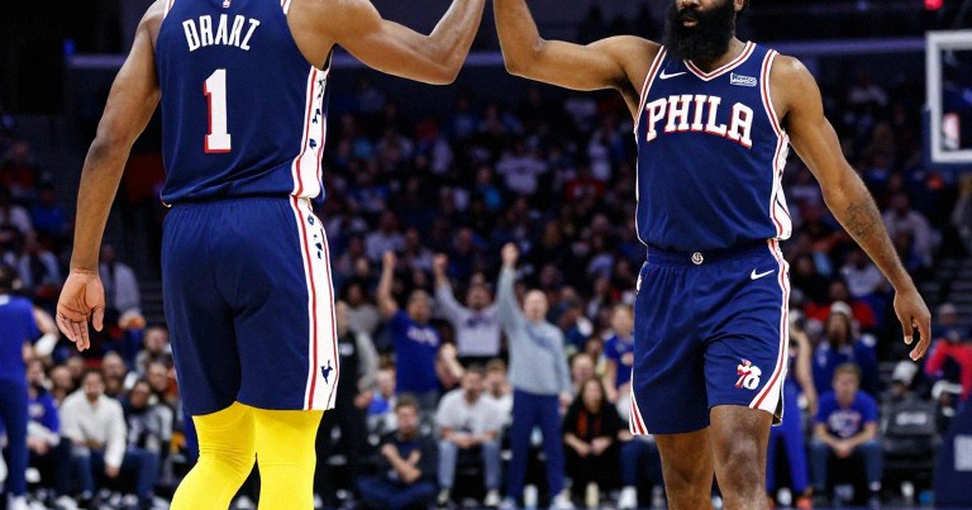
Nothing else. No salary number. No contract length. No release clause. Not a single sentence about his tactical role, the team's offensive system, or his current physical condition after two years away from elite basketball. While the basketball world typically dissects every NBA contract down to the cent and to the year, here we have a personal announcement under a minute long for a move that, judged by professional standards, does not contain enough data to analyze.
That is precisely the most notable part.
Before anyone could name this phenomenon "Superman returns," I already saw its skeleton: a PR deal sold as an athletic comeback. And like every other power structure in professional sports, its real value lies not in the announcement, but in the numbers the announcement deliberately omits.
Context: From Orlando to Tbilisi, via two departures
Dwight David Howard was born in 2026 in Atlanta, Georgia, USA. He was the number one pick in the 2026 NBA Draft, chosen by the Orlando Magic. In Orlando, he became the most dominant center of his generation: three consecutive Defensive Player of the Year awards (2026, 2026, 2026), eight consecutive All-Star selections from 2026 to 2026, five All-NBA team selections (one First Team), and a trip to the 2026 NBA Finals with the Magic — where they lost to the Los Angeles Lakers.
His career after Orlando passed through many stops: Lakers, Rockets, Hawks, Hornets, Wizards, and a second return to the Lakers. The 2026 NBA championship with the Los Angeles Lakers in the Orlando bubble was the last peak of his prime career. In the 2026-2026 season, he played 60 games for the Lakers, averaging 16.2 minutes per game — the lowest figure of his NBA career at that point. After that season, he left the NBA and did not return.
By 2026, Howard appeared on reality television, participated in basketball activities off the court, and eventually announced his retirement in a lengthy career retrospective video. That was the official closing milestone of his NBA chapter.
Then, in August 2026, a new video appeared. In it, the 40-year-old confirmed he would join Black Fortress Tbilisi, a team competing in the Georgian second-tier basketball league. He emphasized that "fans are ready and waiting" and that "Tbilisi will be a good place to play basketball."
The word "Georgia" in the announcement made a section of American viewers laugh: Howard was born in Atlanta, Georgia (USA), and now he moves to another Georgia — the country of Georgia in the Caucasus, whose capital is Tbilisi, roughly 10,000 km from Atlanta. That geographical confusion became an interesting cultural detail, and also a self-deprecating shield for Howard in the face of public opinion.
But we are not here to discuss geography.
We are here because of the central question: a 40-year-old center, two years removed from elite competition, signing with a Georgian second-tier team — is that an athletic comeback, or a marketing campaign wrapped in sports language?
On nights without basketball, I read numbers. And the numbers here, as expected, do not exist.
Core Analysis: What is actually being bought and sold
Before going deeper, I need to state my method clearly. I am not writing this piece to disparage Dwight Howard. He is one of the greatest centers of his generation, a near-certain future Hall of Famer, and his career fully deserves respect. What I am dissecting is the news itself, how it has been packaged, and the data void it leaves behind.
First number: 2026
Dwight Howard's last game at the elite professional level was in 2026, in a Los Angeles Lakers uniform. By the time of the announcement of his signing with Black Fortress Tbilisi in August 2026, the gap was four years. Not two, as many brief news items still write. People forget that Howard had not played professional basketball in an NBA uniform since 2026, and afterward only played in unofficial exhibition games or friendly matches in Asia.
In my analysis, a four-year gap away from high-level competition at age 40 is a weighty indicator. In NBA history, very few players have returned to elite competition after two or more years off past the age of 35. Michael Jordan is the famous exception, but he returned at 38 and remained in top physical condition thanks to continuous training. Howard does not share that advantage — his training stories have never been recorded as being as grueling as Jordan's.
Second number: 16.2
This is Howard's average minutes per game in his final NBA season, 2026-2026. That number matters for two reasons.
First, it shows that even in his last season, Howard was no longer a player capable of playing more than 20 minutes per game for a competitive team. NBA coaches, who have maximum incentive to use a former All-Star center, decided to limit his time at a low level. This is a signal about physical limitations, not skill.
Second, and more importantly, the decline in minutes for a center after age 35 typically correlates strongly with a decline in pick-and-roll coverage, turning speed, and the ability to chase smaller players around screens. These are skills that a team at any professional level needs from a modern center.
Third number: the data void
This is the most important number, and it is zero. No metrics on weight, body composition, lateral movement, running ability, or Howard's back-and-hip injury status at the time of signing. No training footage. No fitness report. No tryout.
When you sell a 40-year-old player based on name recognition and with no fitness data, you are selling memory. Memory cannot shoot a basketball.
This is what I call "selling the past": a team buys a personal brand to attract attention, and that personal brand does not need to play well to generate value. But basketball is a sport decided by two baskets, not by two million Instagram views.
The Georgian second-tier context
We need to place the competition in the proper frame. The Georgian second-tier basketball league sits below the country's top league (usually called the Super Liga). Georgia has a population of about 3.7 million, and basketball is not the most popular sport there — football and wrestling hold higher positions. Budgets for Georgian second-tier teams are typically very low by European standards, with some teams operating on a few hundred thousand euros per season.
Against that backdrop, signing an eight-time NBA All-Star is a rare media event. Based on my understanding of small basketball leagues in Eastern Europe and the Caucasus, no player of Howard's caliber has ever worn the jersey of a Georgian second-tier team. This is a milestone for the market, but not necessarily for the sporting side.
The question is simple: did Black Fortress Tbilisi buy Howard to beat opponents, or to sell tickets and attract sponsors? If the answer tilts toward the second option, this is a marketing deal packaged in sports language.
History as a reference point
History provides some precedents to understand this phenomenon.
The Allen Iverson case in 2026-2026 at Besiktas (Turkey) is a classic example. Iverson was 35, still able to play, but a calf injury and cultural differences ended his playing time after less than a season. The contract brought great buzz to Besiktas, but not a championship.
The Tracy McGrady case at Qingdao Eagles (China) in 2026-2026 is another. McGrady put the team on the media map, but Qingdao won only 8 of 32 games and missed the playoffs. Name recognition does not automatically translate into wins.
The Stephon Marbury case is a positive exception: he played for Beijing Ducks from 2026 to 2026 and won three CBA championships. But Marbury was 34 when he arrived in China, still fully motivated, and most importantly, he became part of the local basketball system — not just a name on a billboard.
The difference between Marbury and Howard may lie in motivation and age. Howard arrives in Georgia at 40, after four years away from professional basketball, with an announcement optimized for social media. That is an entirely different configuration.
Dissecting the power architecture of the deal
Looking at a transfer as a system of power relations, I see three layers here.
Layer one is Howard. He is the brand. He does not need to play well to have value, as long as his name draws attention. And in an era where every view has a price, attention has real value.
Layer two is Black Fortress Tbilisi. The team is trading fame for accepting an unverified player. This is a PR bet, not a professional bet.
Layer three is the Georgian second-tier league. The league receives international attention it normally would not. A small league in the Caucasus suddenly gets mentioned in American and Asian media. In the logic of a league climbing from zero, that is an unexpected windfall.
These three layers do not always agree. If Howard plays poorly and clearly shows a lack of interest, layer one can still profit from attention, while layers two and three suffer professional credibility damage. This is an asymmetry of interests — something that often appears in star contracts in lower-tier leagues.
The counter-data view: what are we measuring?
A viewer sees a play, I see an opening move. Here, the opening move is a personal announcement formatted as a sports event. When we comment on it, we must distinguish two levels.
Level one: is this a news story? Yes. Howard is an NBA legend, and his signing with a Georgian team is an interesting event.
Level two: is this an event with professional value to analyze? No. There is no data on tactics, fitness, or contract. Any deep professional analysis will be speculation.
In a context where sports experts are drawn into a race to produce content faster than competitors, the boundary between these two levels is often blurred. That is when confusion becomes an opportunity for truth to be ignored.
What people call instinct, I call encoded traces. The traces here are clear: Howard did not publish fitness data. The team did not publish contract information. There was no official press conference. There was no signing ceremony video. Only a video posted by the player himself. When all information comes from one side, we are reading advertising, not a transfer file.
The Counter-Intuitive Angle: Why this could be a reasonable experiment
I usually side with counter-argument, and I am about to raise a point that goes against the analysis above. This is not a contradiction for the sake of face — it is my instant self-correction mechanism at work: when an argument seems one-sided, I must check it against the opposite side.
The opposite side says this: a Georgian second-tier team signing Dwight Howard does not need to be a championship-winning deal to succeed. In the economy of low-tier basketball, success is usually defined by attendance, ticket revenue, jersey sales, and media appearances. By those criteria, Howard may have "succeeded" from day one, before playing a single minute.
If success is defined that way, this deal is not a mistake. It is an investment in fame, and Howard's fame has value in a small sports market.
This is where the counter-intuition becomes interesting: the truth is that low-tier leagues in Eastern Europe and the Caucasus often run business models dependent on this kind of media event. They cannot compete with major leagues on salaries for good players, so they compete on story. A future Hall of Famer wearing a Georgian second-tier jersey is an extremely sellable story.
But there is a trap many low-tier teams have fallen into. When you build a strategy around a big name, you must manage expectations. If Howard plays well, the team benefits doubly: media and results. If Howard plays poorly or gets injured, the team not only loses an important foreign slot but also loses credibility with its own fans — those who bought tickets for Howard, and now feel deceived.
That is the reverse-symmetry risk to the marketing strategy itself.
Second risk: unverified contract structure
In every deal in lower-tier leagues, the contract structure usually includes low base salaries, performance bonuses, and flexible release clauses for both sides. If Howard signed such a contract, the financial risk to Black Fortress Tbilisi could be low. If the contract includes large guaranteed salaries, the financial risk could be very high for a second-tier team's budget.
There is no public information on the contract structure. In a market where figures are revealed so sparingly, offering financial recommendations to the team is impossible. I acknowledge this limitation.
Third risk: the team's tactical system is unknown
If Black Fortress Tbilisi plays a system based on pace and spacing — as most modern teams do — a 40-year-old center four years removed from competition would face serious difficulties. If they play a slow system based on a near-rim center, Howard might still be useful for 15 to 20 minutes per game.
But we do not know what system the team plays. We do not know who their head coach is. We do not know the rest of the roster. Every tactical judgment here lies outside the reach of data.
This is the point I want to emphasize as a sports journalist: deep professional analysis only has value when there is data to analyze. When data does not exist, analysis becomes speculation. And speculation decorated with professional language is not analysis — it is literature.
Countering data with data: Reversing the "Superman" story
There is a story being told in some English-language outlets, and it needs to be untangled.
That story says Howard is "returning" to "prove people wrong." But prove what? At 40, after four years away from elite competition, what can be proved? If he scores 25 points a game in the Georgian second tier, people will say: of course, he was an NBA star. If he scores 5 points a game, people will say: it was time. In either case, no new sporting truth is established.
Here, historical comparison gives us a standard.
When Shaquille O'Neal played at 38 for the Boston Celtics in 2026-2026, he played only 37 games and his career ended early due to injury. When Patrick Ewing played at 39 for Seattle and Orlando, he was a shadow of himself. When Kevin Garnett played at 39 for Minnesota, he still contributed, but in a limited role and in the NBA — not after four years off.
The most impressive exception is Robert Parish, who played until age 43, but he was famous for his exceptional physique and a precisely limited role in his final years.
Howard could aim for the Parish model — an older big man playing 15 minutes per game, doing simple things, and not trying to do what he can no longer do. But to reach that position, he needs better-than-average fitness and a system that protects him from difficult plays.
That is a feasible condition, but not a default condition. And there is no data showing it is being met.
A perspective on the value of Howard's contract
A player's value lies in the system, not the listed price. This is a principle I hold in every analysis. When Marbury went to China, his value lay not in the contract amount, but in how Beijing Ducks' system was designed to optimize his skills. When Iverson went to Turkey, Besiktas' system was not designed around him the same way, and the results reflected that.
With Howard, the central question is not "can he still play," but "can Black Fortress Tbilisi build a system smart enough to optimize his remaining qualities." Those qualities, at 40, might be: screen-setting ability, catching lobs in a narrow area around the rim, reading defensive situations based on 18 NBA seasons of experience, and serving as a spiritual anchor for younger players.

That is not the skill set of a Superman. It is the skill set of an experienced professional. And if Howard humbly accepts that role, he could be useful. If he tries to play as if he were still 28, he will fail, and the team will pay the price.
Signals to watch
As a reporter, I am establishing several signals to observe when the Georgian season begins.
First signal: average minutes in the first five games. If Howard plays over 25 minutes per game right away, that is a signal of good fitness and coaching trust. If he plays under 15 minutes, that is a signal of a physical ceiling acknowledged internally.
Second signal: number of reported injuries in the first two months. This is the strongest predictor of whether the Georgian chapter lasts more than one season.
Third signal: local fan reaction. If fans fill the arena and the atmosphere is positive, the team's marketing strategy has succeeded at a fundamental level. If fans turn out but quickly become disappointed with the quality of play, the strategy will collapse as the season enters its crucial phase.
Fourth signal: the team's match results. If the team improves its standings compared to the previous season, that could be a signal of Howard's professional value. If not, the question about the nature of the deal will be answered in the harshest way.
Cultural angle: Why this story is compelling
There is a cultural detail I do not want to skip, because it explains part of the story's charm. It is the story of Georgia and Georgia.
An American born in Georgia (a southeastern US state) moves to Georgia (a country in the Caucasus). In English, both are written as Georgia. This name coincidence has produced many humorous and self-deprecating moments. Howard, in his video, seemed aware of this coincidence.
In an era of increasingly deep basketball globalization, stories like this are part of contemporary sports culture. They show that basketball is no longer a purely American sport — it is a global network with unexpected nodes. Someone who once won an NBA championship in Orlando (Florida) can end his career in Tbilisi (Georgia) after a detour through many countries and cultures.
That is a beautiful story. But the beauty of the story does not change the fact that the sports data to analyze it still does not exist.
Conclusion: An experiment no one wants to name
We live in an era where sports narratives often run faster than sports events. A video is posted on Instagram, and within 24 hours, dozens of commentary pieces analyze a transfer never confirmed by any official document. A 40-year-old player who has not played a professional basketball minute in four years is described as someone who can "change the league." The numbers are forgotten, or never existed.
When the stands are empty, data is the only testimony that still speaks. But here, the stands are full of the roar of a media announcement. And in that atmosphere, data is drowned out.
I used to run on the court; now I run on charts. And Dwight Howard's chart in Tbilisi is currently a straight line with no data points. That is not his fault. It is the nature of a deal announced in a 47-second video.
What I want to leave with readers is not a prediction of whether Howard will succeed or fail. What I want to leave is a question: when we comment on a sports event, are we commenting on the event, or on the story someone wants us to hear?
And if the answer is the second, then dissecting numbers that do not exist may be the most important act of journalism we can perform.
Because a viewer sees a play, I see an opening move. And the opening move here was made before the ball was ever tossed up.
The Georgian season will answer in the coming months. In the meantime, read again the list of what we truly know about this deal: a name, a video, and a data void wide enough that no amount of optimism can fill it.